
What Are the Best Content Optimization Tools for On-Page SEO? (Complete Guide)
Introduction
Creating content that ranks on Google requires much more than adding keywords throughout a page. Search engines have become better at understanding topics, user intent, content quality, and overall page experience. A well-optimized article should answer user questions, cover related concepts, provide accurate information, and make it easy for readers to find what they need.
This is where content optimization tools for on-page SEO become valuable. These tools help marketers, writers, and businesses improve existing content and create new pages that better match search engine requirements.
A good content optimization tool can analyze search results, identify missing topics, suggest relevant keywords, evaluate readability, improve content structure, and provide recommendations to increase ranking potential.
Whether you are updating old blog posts, creating a new SEO article, or building a content strategy, using the right SEO content optimization tools can save time and improve your chances of achieving better organic visibility.
In this guide, we will explore the best content optimization tools for on-page SEO, their important features, how they work, and how to choose the right solution for your SEO goals.
Want to skip the software learning curve? Let The Vital Solutions optimize your content strategy, align your search intent, and boost your rankings. Check out our professional On-Page SEO Services.
What Is Content Optimization?
Content optimization is the process of improving website content so it performs better in search engines and provides more value to users.
Unlike traditional keyword optimization, modern content optimization focuses on the complete search experience. It includes improving:
- Keyword usage
- Search intent alignment
- Content structure
- Topic coverage
- Readability
- Internal linking
- Meta information
- User experience
- Semantic relevance
For example, if you are writing about “content optimization tools,” simply mentioning that keyword multiple times is not enough.
A well-optimized article should also discuss related topics such as:
- SEO content analysis
- Keyword research
- Content scoring
- Search intent
- Semantic keywords
- Competitor analysis
- Internal linking strategies
- Content performance tracking
Search engines evaluate whether a page provides complete information about a topic rather than only checking keyword frequency.
This means successful SEO content optimization requires creating content that is useful, comprehensive, and naturally structured around the needs of the audience.
Best Content Optimization Tools for On-Page SEO
Choosing the right content optimization tools for on-page SEO depends on your goals, workflow, and level of SEO experience. Some tools focus on content research, while others help improve existing pages, optimize keywords, analyze competitors, or track performance.
The best approach is to select tools that support your entire content workflow, from planning and writing to optimization and performance monitoring.
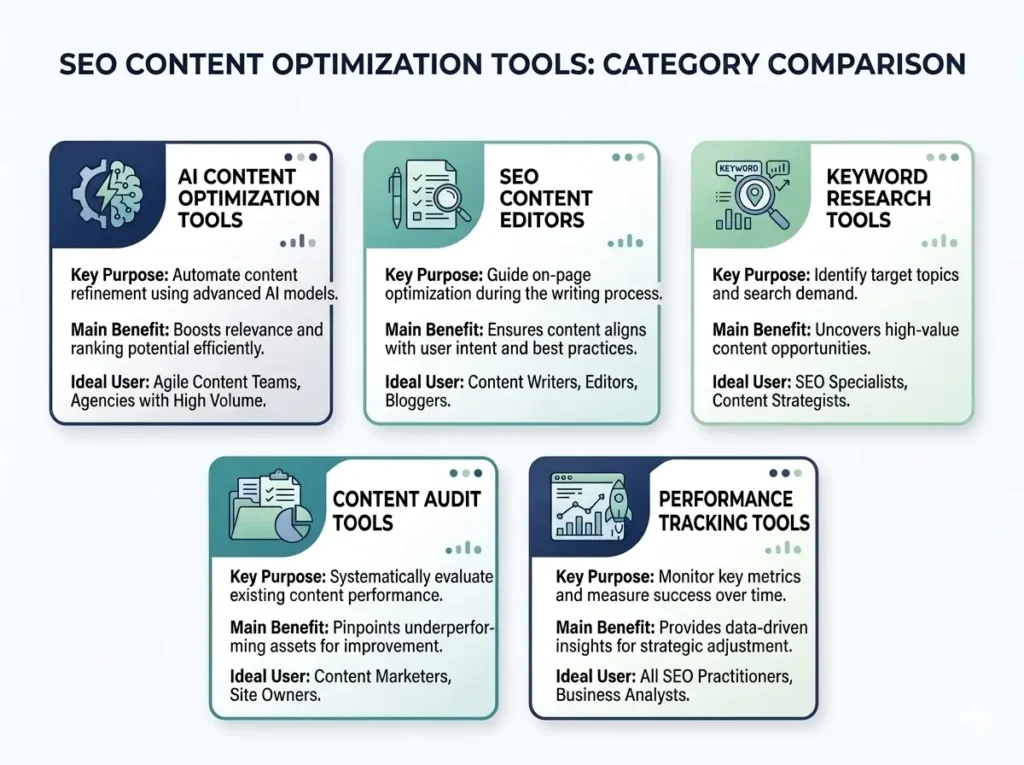
Below are the main categories of tools that help improve SEO content performance.
1. AI-Powered Content Optimization Tools
AI-powered optimization platforms have changed how marketers create and improve content. These tools analyze search results, identify important topics, and provide recommendations based on ranking pages.
They can help with:
- Content briefs
- Keyword suggestions
- Topic coverage
- Content structure
- Missing information
- Search intent analysis
- Writing improvements
An AI-based SEO content optimization tool can reduce manual research time and help writers create content that better matches what users are searching for.
However, AI recommendations should always be reviewed by humans. The strongest content combines AI assistance with expertise, originality, and real-world experience.
2. SEO Content Editors
A SEO content editor helps writers optimize content while creating or updating pages.
These tools usually provide a writing environment where you can check:
- Keyword usage
- Content relevance
- Heading structure
- Readability
- Topic coverage
- Competitor comparisons
They are especially useful for:
- Blog writers
- SEO agencies
- Content teams
- Businesses publishing frequently
A good content editor ensures that articles are optimized before they go live instead of requiring major improvements later.
3. Content Audit Tools
Publishing new content is only one part of SEO. Existing pages often contain hidden opportunities.
A content audit tool helps analyze your website and identify:
- Pages losing rankings
- Outdated articles
- Low-performing content
- Missing keyword opportunities
- Duplicate content issues
- Pages needing updates
Regular content audits are important because search results constantly change.
A page that ranked well two years ago may need improvements to remain competitive today.
4. Keyword Research and Topic Discovery Tools
Keyword research remains a major part of content optimization.
Modern keyword tools help identify:
- Search volume
- Keyword difficulty
- Related keywords
- Long-tail keywords
- Question keywords
- Search trends
However, effective SEO is no longer about targeting one keyword per page.
Instead, focus on building topic depth.
For example, an article targeting best content optimization tools should also cover:
- How content optimization works
- Benefits of SEO optimization
- Features of optimization software
- Content improvement strategies
- SEO measurement methods
This creates stronger topical relevance.
5. Performance Tracking Tools
Optimization does not end after publishing.
SEO performance tools help monitor:
- Keyword rankings
- Organic traffic
- Click-through rates
- Impressions
- Search performance
- User behavior
Tracking results helps determine whether optimization changes are improving visibility.
💡 Is your content secretly losing traffic? Don’t let outdated content or weak keyword structures hold your website back. Get a comprehensive, professional breakdown of your site’s current performance. Claim your custom SEO audit from TVS and uncover your hidden ranking opportunities.
A successful workflow looks like this:
- Research the topic
- Create optimized content
- Publish the page
- Monitor performance
- Update based on data
Content Optimization Tool Comparison
| Tool Category | Best For | Main Benefits |
|---|---|---|
| AI Content Optimization Tools | Content teams and marketers | Topic suggestions, AI recommendations, content analysis |
| SEO Content Editors | Writers and publishers | Real-time optimization while writing |
| Content Audit Tools | Website owners | Finding outdated and weak content |
| Keyword Research Tools | SEO professionals | Discovering search opportunities |
| Performance Tracking Tools | Marketers | Measuring rankings and traffic |
Features Every Content Optimization Tool Should Have
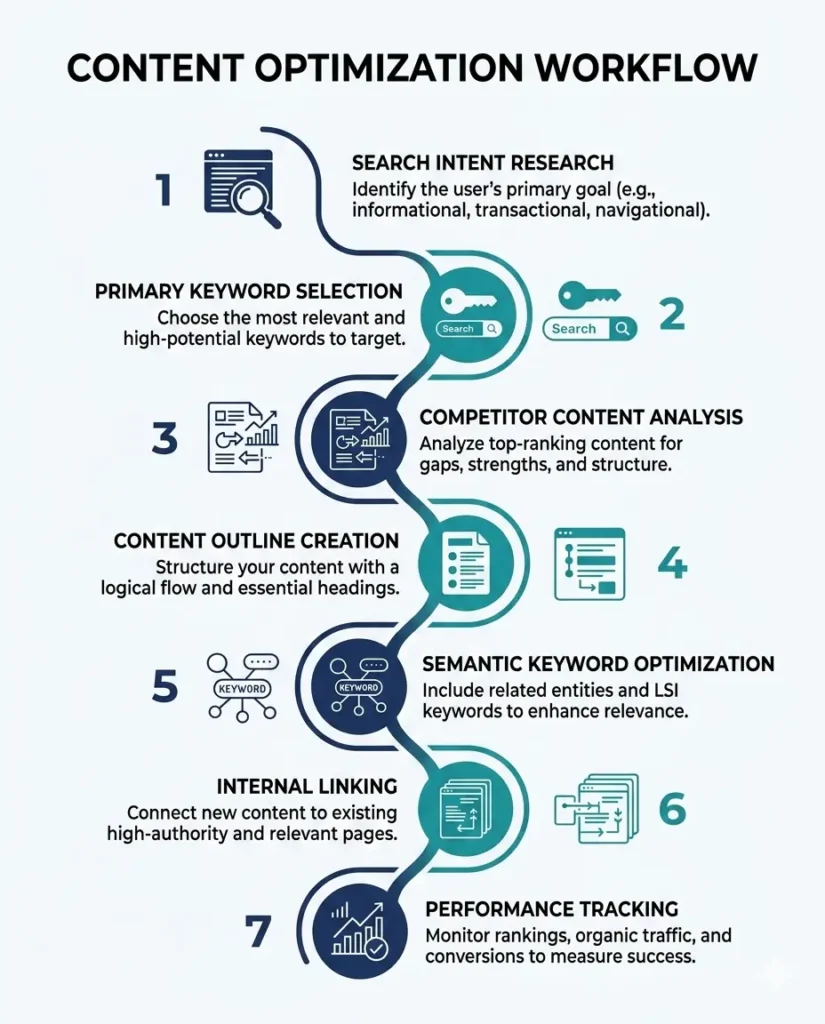
Choosing the right tool can be challenging because many platforms offer different features.
The best tools for content optimization for SEO usually include the following capabilities.
1. Keyword and Topic Recommendations
A quality tool should suggest:
- Primary keywords
- Secondary keywords
- Related terms
- Topic ideas
- Keyword variations
These recommendations help writers create comprehensive content without keyword stuffing.
2. Content Scoring
Many optimization tools provide a content score based on factors such as:
- Keyword coverage
- Content length
- Heading structure
- Readability
- Topic relevance
A content score helps identify areas that need improvement before publishing.
However, the score should be treated as guidance, not a guarantee of rankings.
3. Competitor Content Analysis
A strong SEO content editor compares your page with high-performing results.
It can reveal:
- Topics competitors cover
- Missing sections
- Common questions
- Average content depth
- Keyword opportunities
This helps create more complete resources.
4. Search Intent Analysis
The right tool should help identify whether users want:
- Informational content
- Product comparisons
- Reviews
- Tutorials
- Solutions
Understanding intent prevents creating content that attracts the wrong audience.
5. Readability Improvements
SEO success depends on users staying engaged.
Useful optimization features include:
- Sentence analysis
- Paragraph suggestions
- Readability checks
- Tone improvements
- Grammar recommendations
Easy-to-understand content usually performs better because visitors can quickly find answers.
How to Choose the Right Content Optimization Tool?
The best SEO content optimization software depends on your specific needs.
Before choosing a tool, consider these factors.
1. Define Your SEO Goals
Different websites have different objectives.
A blogger may need:
- Keyword suggestions
- Writing assistance
- Content scoring
An SEO agency may need:
- Competitor research
- Multiple project management
- Reporting features
An enterprise website may require:
- Large-scale audits
- Workflow management
- Performance monitoring
Choose a tool based on your workflow rather than choosing the one with the most features.
2. Check Keyword and Topic Analysis Features
A good optimization platform should understand more than keywords.
Look for features that analyze:
- Related topics
- Semantic keywords
- Search intent
- User questions
- Content gaps
These features help create complete resources instead of pages focused on repetitive keywords.
3. Evaluate Ease of Use
SEO tools should simplify your workflow, not make it complicated.
Consider:
- User interface
- Learning curve
- Integration options
- Collaboration features
- Export options
A powerful tool that your team does not use regularly will provide little value.
4. Consider Your Content Workflow
Think about how your team creates content.
Do you need:
- Content briefs?
- Writing assistance?
- Optimization recommendations?
- SEO audits?
- Performance tracking?
The right tool should fit naturally into your existing process.
Why Content Optimization Matters for SEO?
The competition for organic rankings continues to increase. Thousands of businesses publish content every day, making it harder for average articles to gain visibility.
Content optimization helps your pages stand out by improving their relevance and usefulness.
1. Helps Match Search Intent
Search intent refers to the reason behind a user’s search.
A person searching:
“best content optimization tools”
is likely looking for:
- Tool recommendations
- Feature comparisons
- Pricing information
- Use cases
- Expert opinions
If an article only explains what content optimization means but does not provide tool recommendations, it may fail to satisfy the searcher.
A strong on-page SEO optimization strategy ensures your content matches what users actually want.
2. Improves Search Visibility
Google evaluates hundreds of ranking signals when deciding which pages appear in search results.
Optimized content improves your chances by providing:
- Better topic coverage
- Clear page structure
- Relevant keywords
- Helpful information
- Improved user experience
A content optimization platform can identify areas where your page is weaker compared to competing results and provide actionable recommendations.
3. Increases Organic Traffic
Higher rankings usually lead to more clicks and website visitors.
When your content covers a topic thoroughly and answers related questions, it has a better chance of appearing for multiple keyword variations.
For example, a page optimized around content optimization tools may also rank for:
- SEO writing tools
- SEO content editor
- content analysis tools
- AI SEO tools
- website optimization tools
This creates more opportunities to attract organic traffic.
4. Helps Refresh Existing Content
Many websites lose traffic because their content becomes outdated.
Search trends change, competitors publish better resources, and user expectations evolve.
A content optimization tool can help identify:
- Missing keywords
- Outdated information
- Weak sections
- Poor headings
- Missing questions
- Declining rankings
Regular content updates can help maintain search performance and improve older pages.
How Search Engines Evaluate Content Today?
Modern search engines no longer rely only on exact keyword matches. They analyze the overall meaning, quality, and usefulness of content.
Understanding these factors helps you use on-page SEO tools more effectively.
1. Topic Relevance and Semantic Coverage
Search engines understand relationships between words and concepts.
For example, a page about “SEO content optimization” should naturally include related concepts such as:
- Content audits
- Keyword research
- Search intent
- Internal links
- Metadata
- User experience
- Content quality
These related terms help search engines understand the depth of your content.
This approach is known as semantic SEO.
2. Content Quality and Experience
High-quality content should demonstrate expertise and provide practical value.
Strong content usually includes:
- Accurate information
- Real examples
- Clear explanations
- Helpful recommendations
- Updated statistics
- Actionable advice
SEO tools can help improve content structure, but they cannot replace human expertise.
The best results come from combining optimization software with original insights and professional knowledge.
3. User Experience Signals
A page should not only satisfy search engines but also provide a good experience for visitors.
Important factors include:
- Easy navigation
- Clear headings
- Short paragraphs
- Mobile-friendly design
- Fast loading speed
- Helpful formatting
A technically optimized article that is difficult to read will struggle to perform well.
4. Search Intent Alignment
One of the biggest ranking factors today is whether your content solves the user’s problem.
Before optimizing content, understand:
- Who is searching?
- What information do they need?
- What questions do they have?
- What action do they want to take?
The best SEO content optimization software helps analyze search results to understand the type of content Google prefers.
Content Optimization vs Keyword Optimization
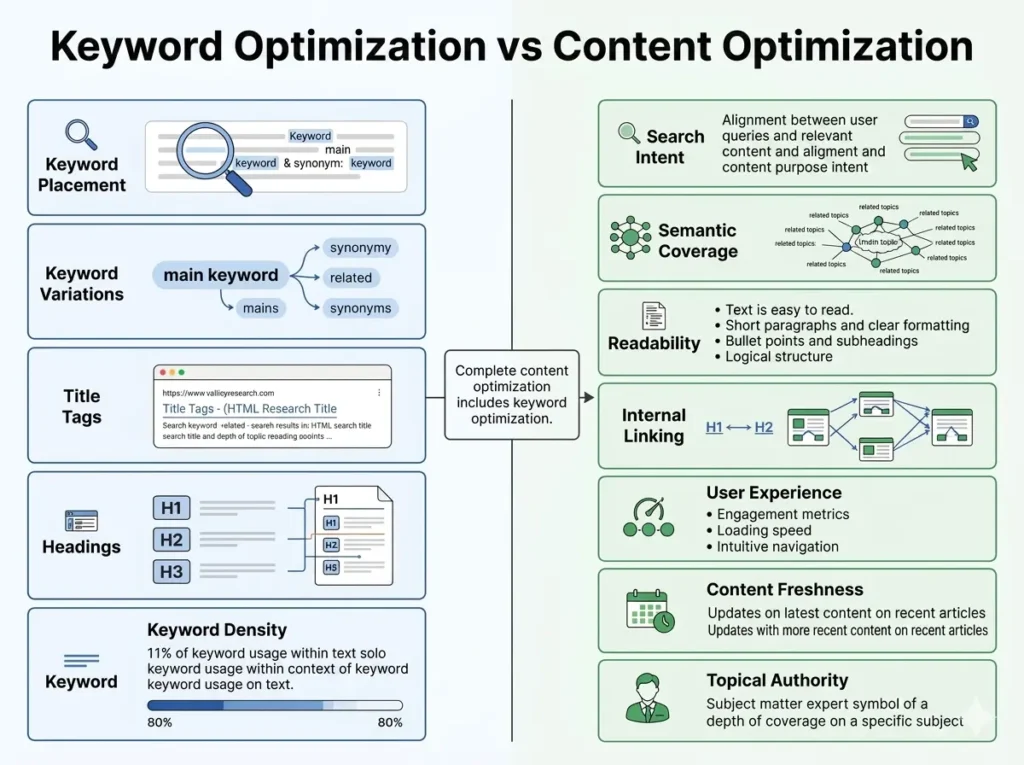
Many people confuse keyword optimization with complete content optimization.
Although keywords are important, they represent only one part of SEO.
Keyword Optimization
Keyword optimization focuses on:
- Adding target keywords
- Improving keyword placement
- Finding keyword variations
- Avoiding keyword stuffing
Example:
Adding “content optimization tools” naturally in important sections.
Content Optimization
Content optimization covers a wider strategy:
- Understanding search intent
- Improving topic coverage
- Adding related concepts
- Improving readability
- Strengthening internal links
- Updating outdated information
- Improving user experience
A page can contain the correct keyword but still fail if it does not answer the user’s question.
Modern SEO requires a complete content optimization approach.
Complete Content Optimization Checklist
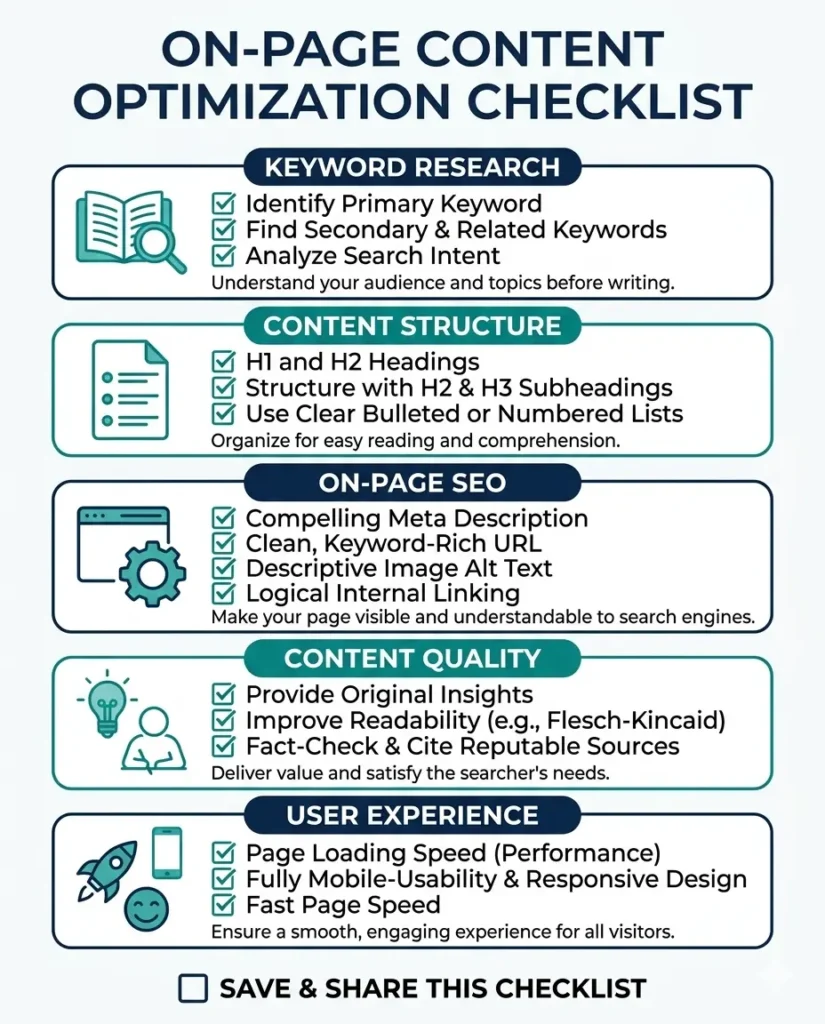
Use this checklist before publishing any SEO-focused article.
Keyword Research
✓ Identify primary keyword
✓ Add secondary keywords naturally
✓ Find related search terms
✓ Analyze user intent
Content Structure
✓ Create a clear H1 title
✓ Use descriptive H2 and H3 headings
✓ Add short paragraphs
✓ Include lists and tables where useful
✓ Answer common questions
On-Page SEO
✓ Optimize title tag
✓ Write a compelling meta description
✓ Use keywords naturally in headings
✓ Optimize images with relevant alt text
✓ Create SEO-friendly URLs
✓ Add internal links
Content Quality
✓ Provide accurate information
✓ Add examples
✓ Include expert insights
✓ Update outdated sections
✓ Avoid unnecessary repetition
User Experience
✓ Improve readability
✓ Ensure mobile friendliness
✓ Use clear formatting
✓ Make information easy to find
Common Content Optimization Mistakes to Avoid
1. Focusing Only on Keyword Density
Keyword stuffing does not improve rankings.
Search engines understand topics better than before, so content should focus on usefulness rather than repeating keywords.
2. Ignoring Search Intent
A page may target the correct keyword but fail because it provides the wrong type of information.
Always analyze what users expect before creating content.
3. Publishing Without Updating
SEO is not a one-time activity.
Regular optimization helps maintain rankings as search behavior and competition change.
4. Depending Completely on AI
AI tools can speed up research and writing, but they should not replace human expertise.
Original insights, experience, and accurate information create stronger content.
Frequently Asked Questions
What is the best content optimization tool for SEO?
The best tool depends on your goals. A good content optimization platform should provide keyword analysis, content scoring, competitor insights, search intent analysis, and optimization recommendations.
Do content optimization tools improve Google rankings?
Content optimization tools can improve SEO performance by helping create better content, but they do not guarantee rankings. Rankings also depend on website authority, backlinks, technical SEO, and competition.
Are AI SEO tools useful for content optimization?
Yes, AI SEO tools can help with research, topic discovery, content analysis, and optimization suggestions. However, human review is necessary to maintain accuracy and originality.
How often should I optimize old content?
Most websites should review important pages regularly. Updating content every few months or whenever rankings decline can help maintain search visibility.
What is the difference between SEO writing tools and content optimization tools?
SEO writing tools mainly help create content, while content optimization tools analyze and improve existing content based on SEO factors such as topic coverage, search intent, and ranking opportunities.
Conclusion: Choosing the Best Content Optimization Tools for On-Page SEO
The best content optimization tools for on-page SEO help businesses create content that satisfies both search engines and users.
Modern SEO success requires more than adding keywords. Effective optimization involves understanding search intent, improving topic coverage, creating helpful content, and continuously analyzing performance.
The right tool can help identify opportunities, improve content quality, and make SEO workflows more efficient. However, tools should support your strategy rather than replace human creativity and expertise.
Ready to rank without the guesswork? Choosing the right tools is only half the battle—knowing how to apply their insights takes time and expertise. Let the experts at The Vital Solutions handle your optimization for you. Explore our tailored On-Page SEO Services today and watch your organic traffic grow.
By combining smart optimization software with strong research, valuable insights, and consistent updates, you can create content that has a better chance of earning higher rankings and attracting qualified organic traffic.