Introduction: Why On-Page SEO Matters in 2026
On Page SEO Checklist helps you optimize every element of your website, from titles and headings to images and links, ensuring higher search rankings and better user experience. In 2026, on-page SEO is no longer just ticking off a list of elements. With AI-powered search engines, Google updates, and LLMs interpreting content semantically, you need a complete, action-oriented on-page SEO checklist.
Most top-ranking pages list items like title tags, meta descriptions, and URLs, but they rarely explain why these matter, how to implement them practically, or how to measure impact.
This guide fills that gap with:
- Step-by-step audit workflow
- Real before/after examples
- Downloadable templates and tools
- AI-friendly content optimization
Let TVS analyze your website with a comprehensive on-page SEO audit and help you climb the search rankings faster. Request your audit now!
1. Understanding On-Page SEO and User Intent
On-page SEO includes all optimizations you can make directly on your web pages. It affects ranking, CTR, and user experience.
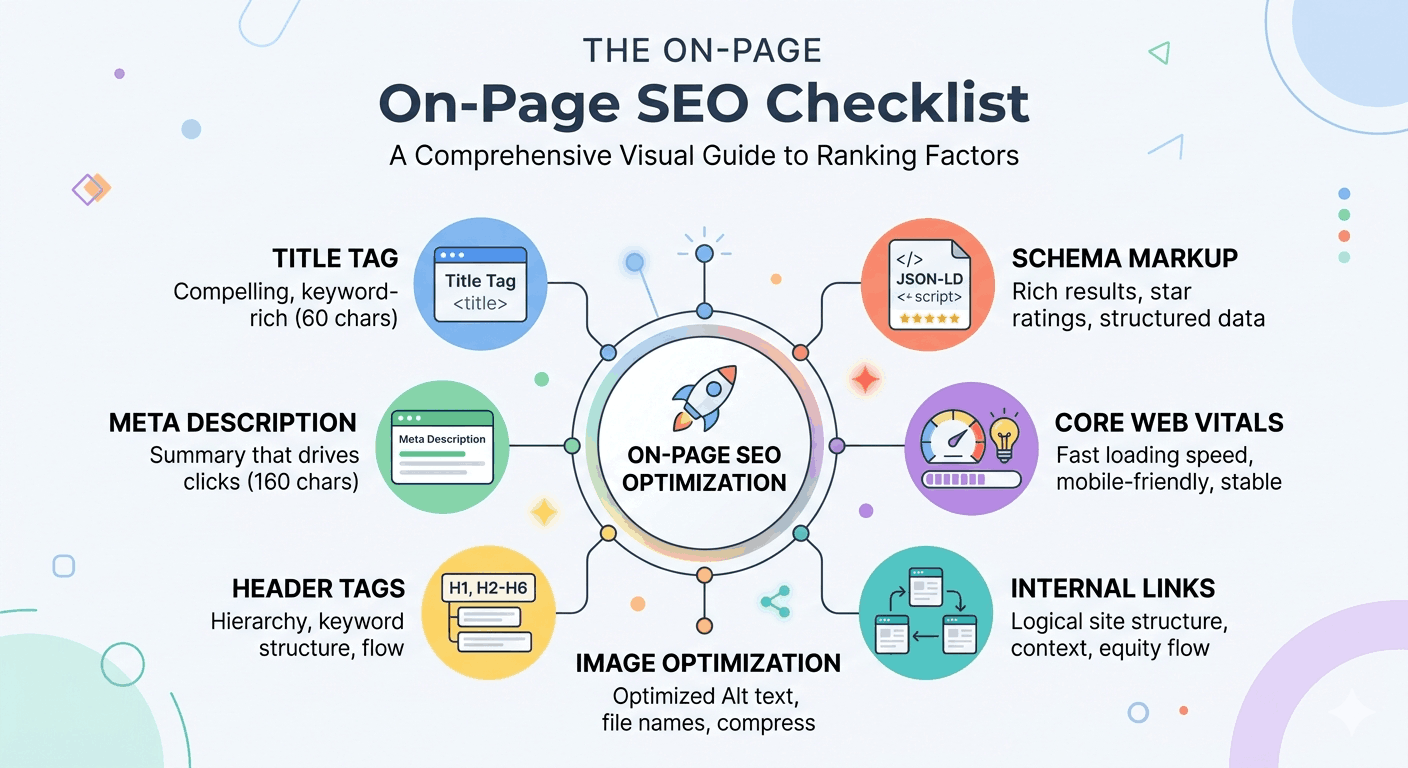
Key Elements Covered in Most Checklists:
- Title tags (keyword placement & length)
- Meta descriptions
- URL structure
- Heading structure (H1–H3)
- Internal linking
- Image optimization (alt text & compression)
- Schema markup
- Page speed & Core Web Vitals
- Mobile-friendliness
- Content quality & keyword placement
Understanding Why These Matter
Top pages rarely explain user intent for “on-page SEO checklist.” To fully satisfy searchers:
- Identify what users want after reading your checklist.
- Show the difference between informational vs transactional content.
- Model content for Google SERP features (featured snippets, PAA, AI results).
Pro Tip: Include an intent section for each checklist item explaining why it matters for search visibility and user engagement.
2. Keyword Placement and Semantic SEO
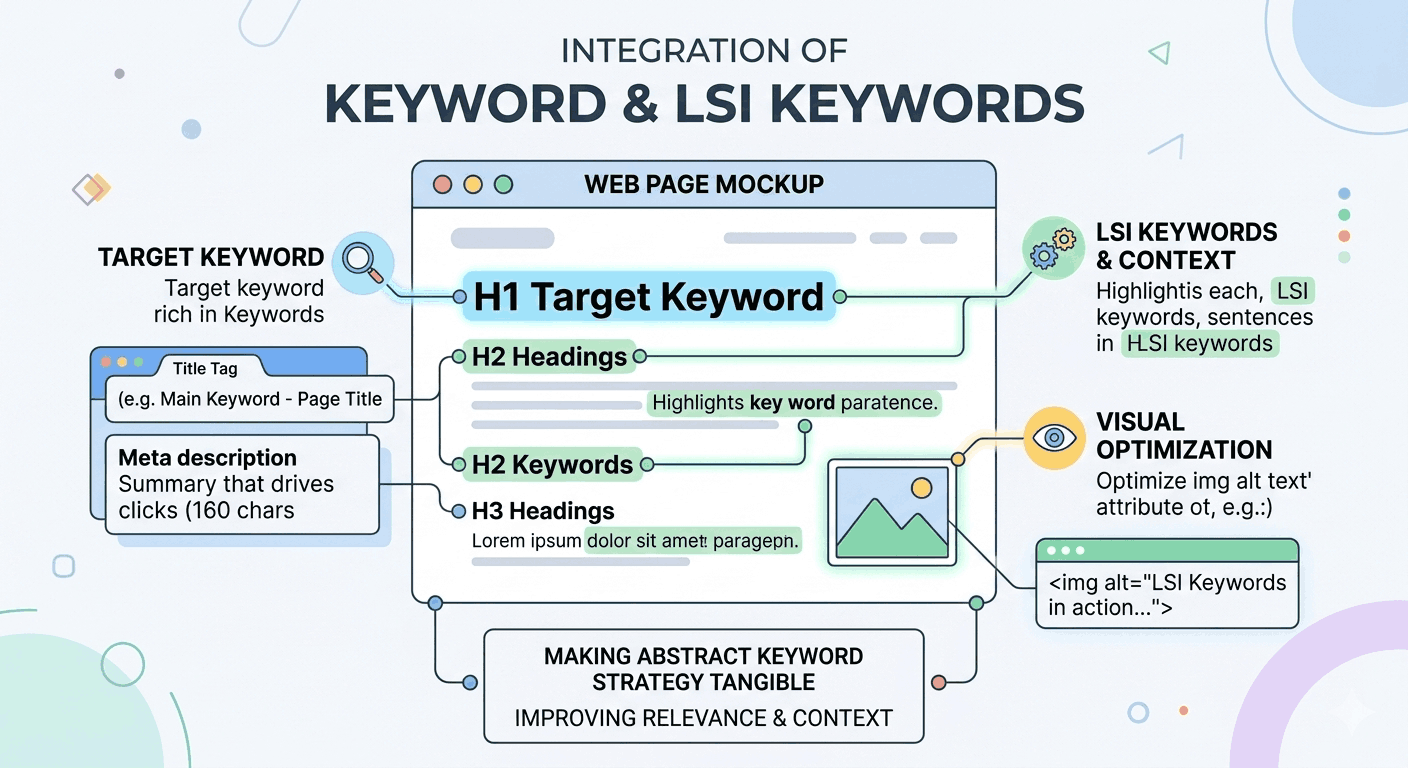
Optimizing your page requires strategic keyword placement.
For example,
Primary Keyword: On Page SEO Checklist
LSI & Related Keywords:
- On-page optimization checklist
- On-page SEO best practices
- On-page ranking factors
- SEO checklist template
- Keyword placement strategy
- Semantic SEO keywords
Placement Recommendations:
- Include primary keyword in: page title, H1, first 100 words, meta description, and 2–3 subheadings.
- Use LSI keywords naturally throughout the content.
- Avoid over-optimization; maintain readability.
- Example H1: “The Ultimate On Page SEO Checklist 2026”
- Example H2: “Keyword Placement Strategy and LSI Optimization”
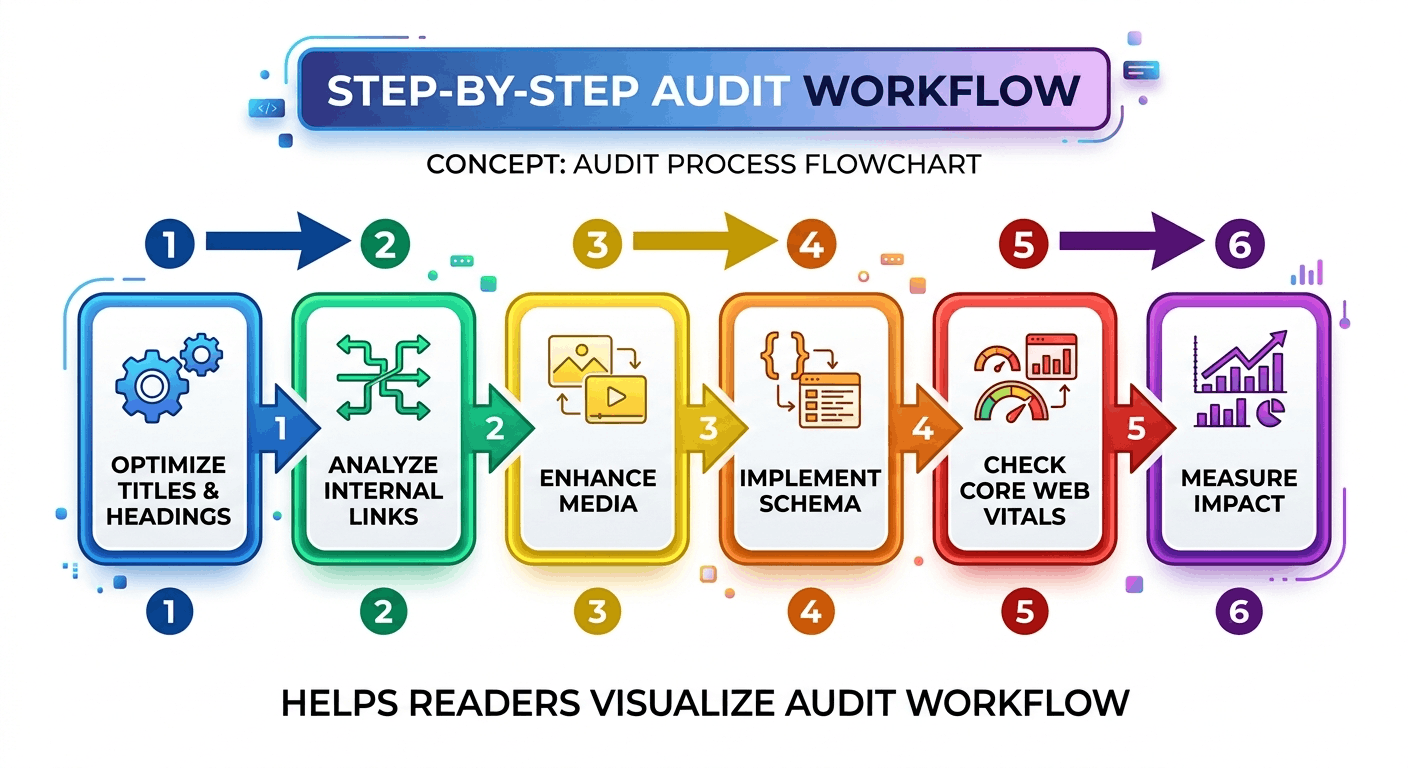
3. Step-by-Step Audit Workflow with Examples
Here is complete workflow about how to implement them in practice.
“Ready to see how your pages perform? Let TVS conduct a full on-page SEO audit and uncover opportunities to boost your rankings and traffic—start today!”
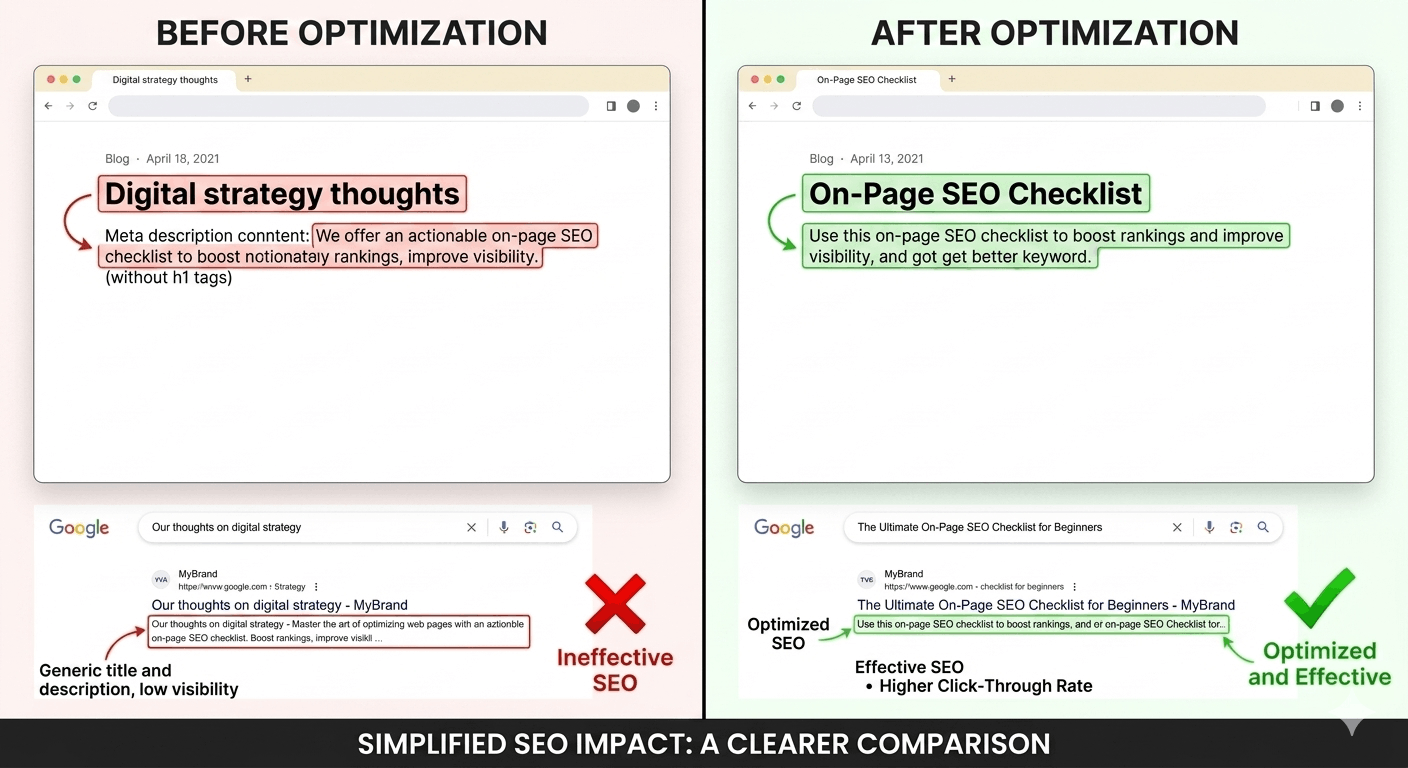
Step 1: Audit Titles, Meta, & URLs
- Check title tags: ensure main keyword at start, <60 characters.
- Meta descriptions: under 160 characters, action-oriented.
- URL structure: descriptive, keyword-rich, short.
Step 2: Headings & Internal Links
- H1: main keyword
- H2/H3: LSI keywords & subtopics
- Internal linking: link cluster pages to pillar page
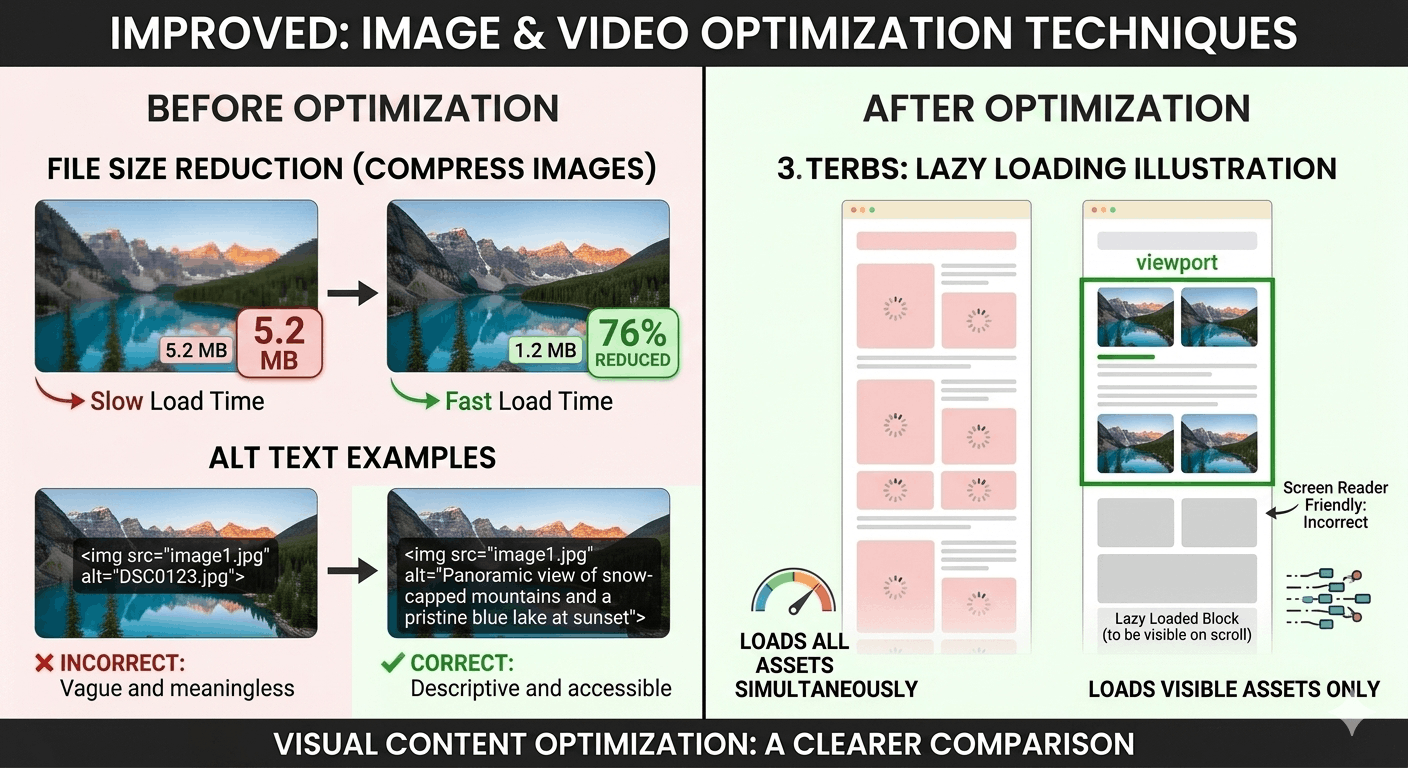
Step 3: Media Optimization
- Compress images & use descriptive alt text
- Lazy-load media to improve speed
- Include captions & transcripts for videos
Step 4: Schema & Structured Data
- Apply JSON-LD for FAQ, Article, Product schemas
- Test using Google Rich Results Test
Step 5: Core Web Vitals
- LCP: <2.5s, CLS: <0.1, FID: <100ms
- Tools: PageSpeed Insights, Lighthouse, GTmetrix
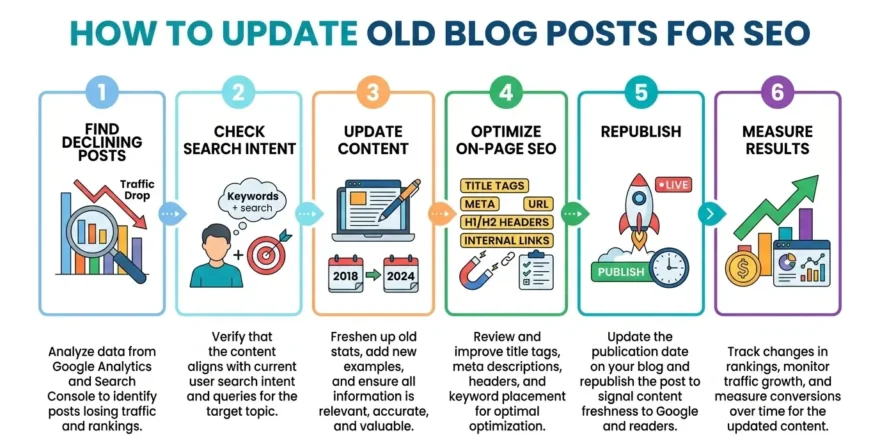
Step 6: Measure Impact
- Track ranking changes & CTR in Google Search Console
- Compare pre/post optimization screenshots
Step 7: Priority Matrix
- First 30 minutes: title tags, meta, URLs, headings
- 1–3 days: internal linking, images, schema
- 1 month: Core Web Vitals, content structure, AI optimization
4. Downloadable Templates & Tools
Most top pages mention tools but don’t provide outputs.
-
- Printable PDF checklist: Download PDF
- Google Sheets audit template: Download Sheet
- Screaming Frog workflow guide
- Semrush/Ahrefs audit examples
Example Template Table:
| Task | Current Status | Recommended Fix | Completed? | Notes |
|---|---|---|---|---|
| Title Tag Optimization | Missing main keyword | Add keyword at start | ✅ | Example: “On Page SEO Checklist 2026” |
| H1 Optimization | Generic H1 | Replace with keyword-rich H1 | ✅ | Shows improvement in CTR |
| Schema Implementation | Not added | Add FAQ JSON-LD | ✅ | Helps rich snippet visibility |
5. AI-Oriented On-Page SEO
- Use FAQ sections targeting AI queries.
- Clear headings and structured schema help LLMs interpret content.
- Include LSI keywords for semantic relevance.
Example AI FAQ:
- Q: How do I create a complete on-page SEO checklist for AI search?
- A: Use structured headings, FAQ schema, LSI keywords, and step-by-step audit workflow to make content AI-ready.
Ensure your content is AI-ready and optimized for Google’s rich results. Get a professional on-page SEO audit from TVS and implement changes with confidence.
6. Case Studies & Before/After Examples
- Example: After updating H1, meta description, and adding schema:
- CTR improved 22%
- Organic traffic grew 18% in 30 days
7. Common Pitfalls to Avoid
- Keyword stuffing
- Irrelevant schema markup
- Poor internal linking
- Ignoring Core Web Vitals
- Overly long or unstructured content
Conclusion
In today’s competitive digital landscape, following a comprehensive on-page SEO checklist is essential for improving rankings, boosting traffic, and enhancing user experience. By optimizing titles, meta descriptions, headings, URLs, images, schema, and Core Web Vitals, you can ensure your website performs at its best across search engines and AI-driven platforms. Don’t leave your SEO to chance—take actionable steps now. For a professional assessment, TVS offers expert on-page SEO audit services to help you identify gaps, implement improvements, and maximize your website’s potential.
Contact TVS today and make your website search-ready for 2026 and beyond.
FAQs
What is an On-Page SEO Checklist for an eCommerce website?
It’s a guide to optimize product and category pages for search engines and users. Key steps include:
- Keywords: Use main and long-tail keywords in titles, meta, URLs, descriptions, and image alt text.
- Titles & Meta: Write unique, keyword-rich titles and meta descriptions.
- URLs & Headings: Keep URLs short and structured; use H1 for product/category names and H2/H3 for features, reviews, or FAQs.
- Content: Unique product descriptions with bullet points for easy reading.
- Images & Media: Optimize file size, use descriptive alt text, and include high-quality images/videos.
- Internal Linking: Link related products and categories to improve navigation and authority.
- Technical & UX: Fast-loading pages, mobile-friendly design, and schema markup for rich results.
What is the minimum viable on-page SEO plan?
Focus on title tags, meta description, headings, URL, and internal links initially.
What is On-Page SEO in simple words?
On-Page SEO is the practice of optimizing your website pages so search engines and users can understand them easily. It includes titles, meta descriptions, headings, URLs, images, content, internal links, and page speed. Proper on-page SEO helps your site rank higher, appear in rich results, and provide a better user experience.
What is a good On-Page SEO score?
A good on-page SEO score is typically 80% or higher on popular tools like Semrush, Ahrefs, or Yoast. It means your page is well-optimized for keywords, headings, meta, images, links, and page speed. Higher scores improve search rankings, visibility, and AI/LLM understanding of your content.
How to audit on-page SEO with real tools?
Use Screaming Frog, Google Search Console, PageSpeed Insights, and document pre/post optimization.
Which on-page factors have measurable lift in 2026?
Title tags, meta descriptions, headings, internal links, schema markup, Core Web Vitals, and content quality.
Can AI interpret on-page SEO improvements?
Yes. Structured content, schema markup, LSI keywords, and FAQs improve visibility in AI-powered search.