Small Business Digital Marketing Budget in 2026: Cost Guide
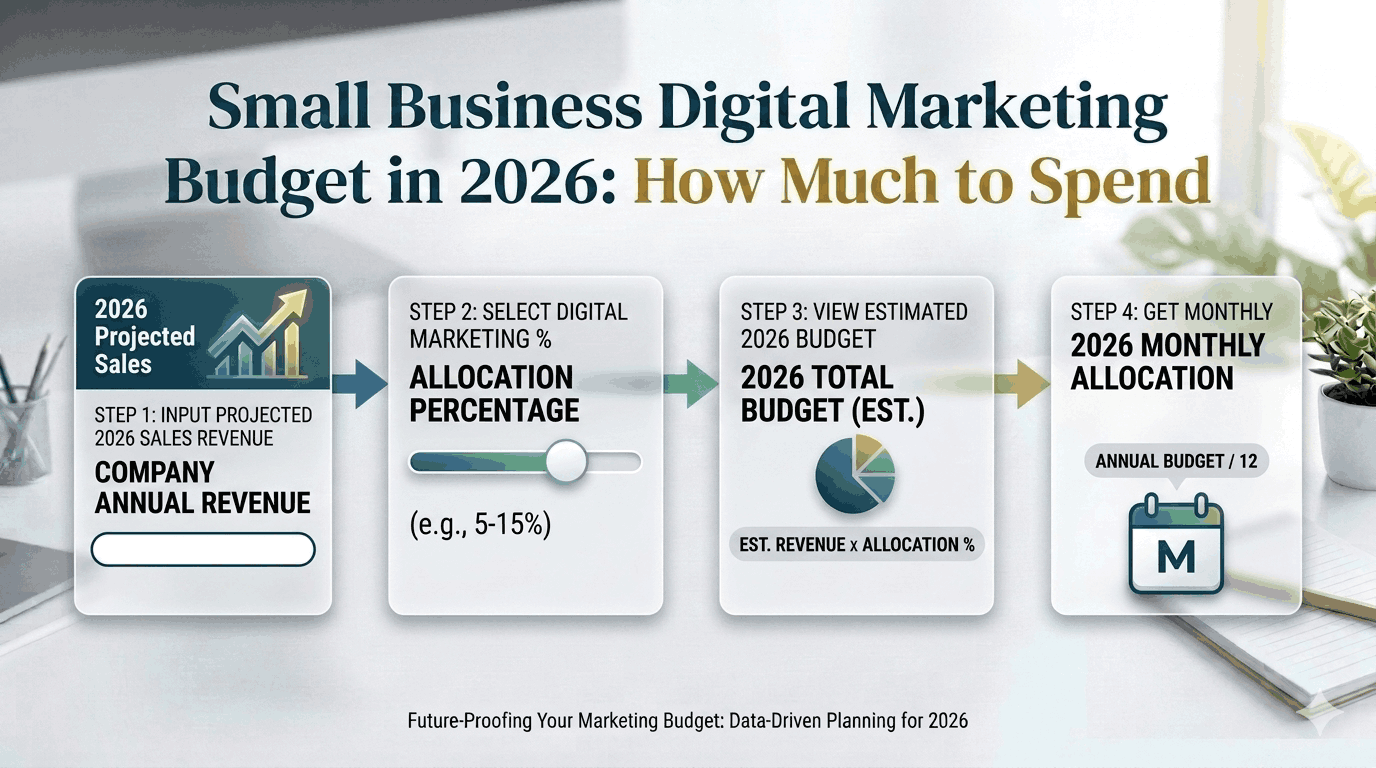
Most small businesses should allocate between 5% and 12% of annual revenue to digital marketing in 2026. Businesses focused on aggressive growth may invest between 12% and 20% or more. Monthly budgets typically range from $500 for local businesses to over $15,000 for highly competitive industries.
If you are trying to determine the right small business digital marketing budget for 2026, you are not alone. Most business owners understand the importance of online visibility, but many struggle to decide how much to invest without wasting money. The reality is that there is no single budget that works for every company. The right investment depends on your revenue, goals, industry, competition, and growth plans.
In this guide, you will learn how much a small business should spend on digital marketing, how to calculate the right budget, how to divide spending across channels, and how to maximise return on investment.
What Is a Realistic Digital Marketing Budget in 2026?
A successful digital marketing budget is not about spending the most money. It is about investing in the channels that generate measurable business results.
For many small businesses, a realistic monthly budget falls into the following ranges:
| Business Type | Monthly Budget | Primary Goal |
|---|---|---|
| Lean local business | $500 to $2,000 | Local visibility and lead generation |
| Growth focused small business | $2,000 to $7,500 | Consistent leads and brand growth |
| Competitive small business | $7,500 to $15,000+ | Faster growth and market share expansion |
These figures can vary depending on whether marketing is managed in house, outsourced to an agency, or handled through a hybrid approach.
A Simple Rule of Thumb
For established businesses, spending between 5% and 10% of annual revenue on marketing is a common benchmark.
According to guidance from the U.S. Small Business Administration, many businesses allocate around 7% to 8% of gross revenue to marketing, although growth focused companies often spend significantly more.
If you are:
-
Launching a new business
-
Entering a competitive market
-
Introducing a new service
-
Expanding into new locations
then spending between 10% and 20% of revenue may be more realistic.
New businesses often invest more heavily during the first few years because they need to build awareness, authority, and customer trust.
How to Calculate Your Digital Marketing Budget?
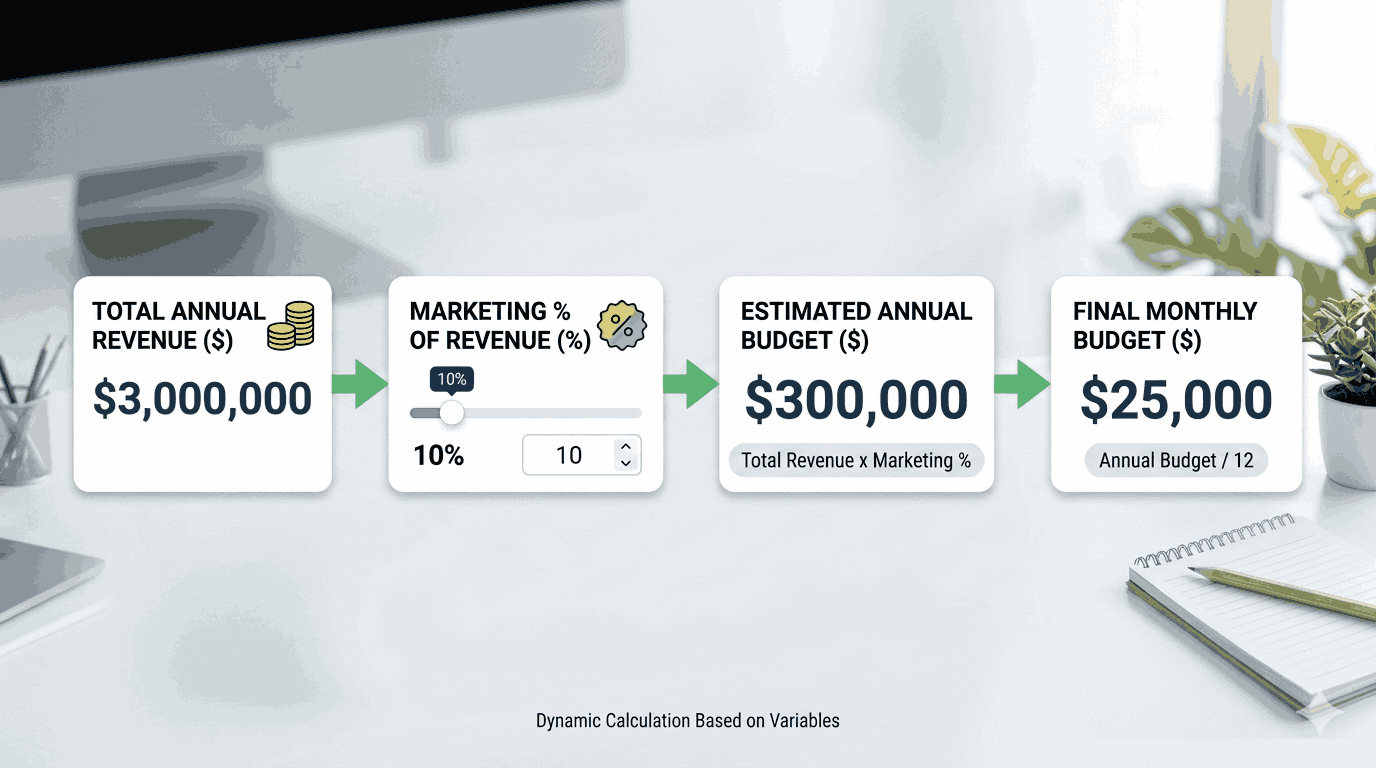
Many business owners struggle because they do not know where to start. A simple formula can help.
Step 1: Determine Annual Revenue
Example:
Annual Revenue = $500,000
Step 2: Choose a Marketing Percentage
Marketing Budget = 8%
Step 3: Calculate Annual Budget
$500,000 × 8% = $40,000
Step 4: Calculate Monthly Budget
$40,000 ÷ 12 = $3,333 per month
This approach gives business owners a realistic starting point and makes budgeting far easier.
What Affects Your Digital Marketing Budget?
There is no universal budget because digital marketing costs depend on several variables.
1. Your Business Goals
Are you trying to:
-
Generate local leads
-
Increase ecommerce sales
-
Build brand awareness
-
Launch a new service
Different objectives require different levels of investment.
2. Your Industry
Some industries are far more competitive than others.
For example:
-
Legal services
-
Healthcare
-
Insurance
-
SaaS software
often face significantly higher advertising costs than local service businesses.
3. Competition Level
The more businesses competing for the same audience, the more budget is usually required to achieve visibility.
A local landscaping company may compete against a few businesses, while a personal injury law firm could compete against hundreds.
4. Geographic Market
Marketing costs often increase in larger cities and highly populated regions where advertising demand is higher.
A campaign targeting London, New York, or Los Angeles will usually require a larger budget than one targeting smaller towns.
5. In House vs Agency Support
Managing marketing internally may reduce direct expenses, but it requires time, expertise, and resources.
Working with an agency increases costs but often improves execution, efficiency, and results.
6. How Quickly You Need Results
SEO is a long term strategy.
Paid advertising can generate traffic and leads much faster.
Businesses seeking immediate growth often invest in both.
Recommended Budget by Industry
One of the biggest budgeting mistakes is assuming every industry requires the same level of investment.
| Industry | Recommended Monthly Budget |
|---|---|
| Local Services | $500 to $3,000 |
| Healthcare | $2,000 to $8,000 |
| Legal Services | $3,000 to $15,000+ |
| Ecommerce | $2,500 to $20,000+ |
| SaaS | $5,000 to $50,000+ |
These ranges vary based on market size, competition, and growth objectives.
How Should a Small Business Split Its Digital Marketing Budget?
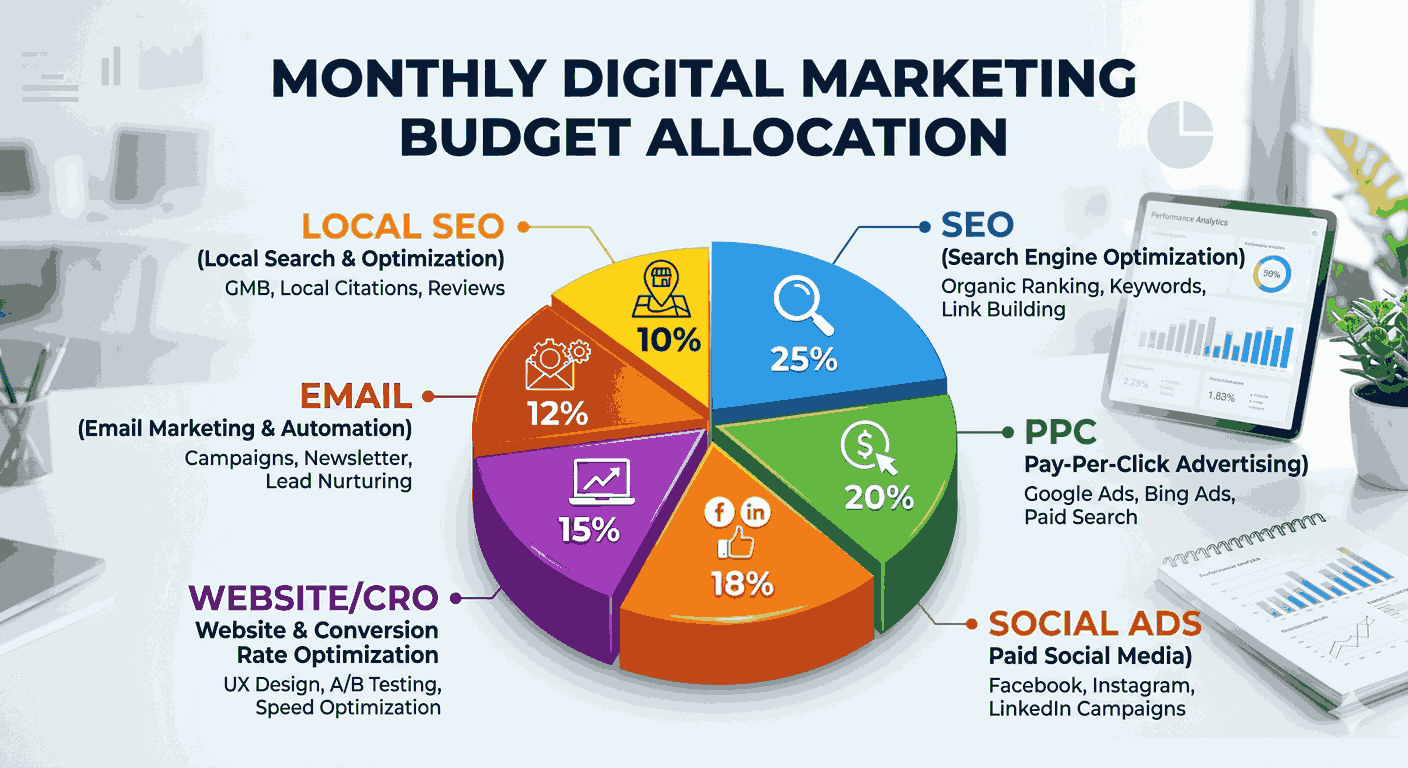
A balanced strategy combines immediate lead generation with long term growth.
| Channel | Suggested Allocation |
|---|---|
| SEO and Content Marketing | 25% to 35% |
| Paid Search Advertising | 20% to 35% |
| Social Media Advertising | 10% to 20% |
| Website Optimisation and CRO | 10% to 15% |
| Email Marketing and CRM | 5% to 10% |
| Local SEO and Reviews | 5% to 10% |
This allocation supports both short term revenue and long term visibility.
How Much Do Digital Marketing Services Cost in 2026?
Many business owners search for budget advice because they want to understand agency and service pricing.
| Service | Typical Monthly Cost |
|---|---|
| SEO Services | $500 to $5,000+ |
| PPC Management | $500 to $3,000+ |
| Content Marketing | $300 to $2,000+ |
| Social Media Management | $300 to $2,500+ |
| Conversion Optimisation | $500 to $5,000+ |
| Email Marketing | $100 to $2,000+ |
Actual costs vary depending on scope, market competition, and provider experience.
Why Digital Marketing Budgets Matter More in 2026
Google continues to prioritise:
-
Helpful content
-
User experience
-
Trust signals
-
Expertise
-
Relevance
Businesses need more than traffic.
They need:
-
High quality content
-
Effective conversion paths
-
Reliable analytics
-
Strong offers
Investing only in advertising without improving the customer journey often produces disappointing results.
What We See Working in 2026
After working with small businesses across local services, healthcare, professional services, and ecommerce, we consistently see stronger results when businesses combine SEO, paid advertising, and conversion optimization instead of relying on a single marketing channel.
The businesses achieving the highest ROI are not necessarily the ones spending the most money. They are the ones measuring performance, improving conversions, and investing consistently.
Sample Digital Marketing Budgets
Example 1: $1,500 Per Month
SEO and Local SEO: $500
Google Business Profile and Reviews: $200
Google Ads: $500
Social Media Advertising: $200
Reporting Tools: $100
Best for:
-
Salons
-
Contractors
-
Local service providers
-
Independent professionals
Example 2: $5,000 Per Month
SEO and Content: $1,500
Paid Search: $1,500
Social Advertising: $800
Website Improvements: $500
Email Marketing: $300
Reporting and Creative: $400
Best for:
-
Healthcare clinics
-
B2B businesses
-
Ecommerce stores
-
Professional service firms
Example 3: $10,000+ Per Month
SEO Strategy: $2,500
Paid Search: $3,000
Paid Social: $1,500
CRO: $1,000
Email Marketing: $500
Creative and Testing: $1,500
Best for:
-
Multi location businesses
-
Competitive industries
-
Rapid growth companies
What Should a Small Business Invest In First?
If your budget is limited, focus on the essentials.
1. Website
Your website design should be:
-
Mobile friendly
-
Fast loading
-
Easy to navigate
-
Conversion focused
2. Local SEO
For local businesses, Google Business Profile optimization and review generation often provide excellent returns.
3. SEO Content
Useful content helps businesses build authority, rankings, and organic traffic over time.
4. Paid Search
Google Ads can generate leads quickly when campaigns are properly managed.
5. Email Marketing
Email remains one of the highest ROI marketing channels available.
Important Digital Marketing Statistics for 2026
Businesses that understand the numbers make better budgeting decisions.
-
Organic search continues to drive a large percentage of website traffic for many businesses.
-
Email marketing remains one of the highest ROI digital marketing channels.
-
Google processes billions of searches every day, making search visibility a critical business asset.
-
Businesses that track conversions typically achieve better marketing efficiency than those focused only on traffic metrics.
How to Know if Your Marketing Budget Is Working?
Track meaningful metrics, including:
-
Cost per lead
-
Cost per acquisition
-
Return on ad spend
-
Conversion rate
-
Organic traffic growth
-
Revenue generated
-
Customer lifetime value
Traffic alone is not enough.
Revenue and profitability are what matter most.
Common Digital Marketing Budget Mistakes
1. Spending Without a Strategy
Every marketing activity should support a clear business objective.
2. Putting Everything Into One Channel
Diversification reduces risk and improves stability.
3. Ignoring Conversion Optimization
More traffic means little if visitors do not convert.
4. Chasing Cheap Clicks
Focus on lead quality rather than traffic volume.
5. Failing to Review Performance
Monthly reviews help identify opportunities and eliminate wasted spending.
Final Thoughts
For most businesses, the ideal small business digital marketing budget in 2026 falls between 5% and 12% of annual revenue.
Businesses focused on growth often invest between 12% and 20%.
Start with a budget that covers:
-
Website optimisation
-
SEO
-
Local visibility
-
Paid advertising
-
Analytics and tracking
Then scale investment based on performance.
The most effective marketing budget is not the largest one.
It is the one aligned with business goals, measurable outcomes, and sustainable growth.
Call to Action
Not sure whether your business should spend $1,000 or $10,000 per month on digital marketing? The Vital Solutions can create a customised marketing budget based on your industry, goals, competition, and growth targets. We help businesses invest in the right channels, eliminate wasted spend, and generate measurable results.
Contact us today for a tailored strategy consultation.
FAQs
What percentage of revenue should a small business spend on marketing?
Most established businesses spend between 5% and 10% of revenue on marketing, while growth focused businesses may invest between 10% and 20%.
Is $1,000 per month enough for digital marketing?
Yes. Many local businesses can achieve results with a $1,000 monthly budget when spending is focused on local SEO, Google Business Profile optimisation, and targeted advertising.
How much should a startup spend on digital marketing?
Startups often spend between 10% and 20% of projected revenue because they need to build awareness and generate initial demand.
What is the average cost of SEO for a small business?
Most small businesses spend between $500 and $5,000 per month on SEO depending on competition and objectives.
Should I invest more in SEO or Google Ads?
The strongest strategy usually combines both. Google Ads provides immediate visibility, while SEO builds long term organic traffic and authority.