How Pakistan-Based Agencies Can Get Cited in AI Overviews for US/UK Clients
A Pakistan-based agency gets cited in AI Overviews for international clients the same way any agency does — through clearly structured, directly-answering content and demonstrated expertise. Location isn’t a ranking factor for AI-generated answers the way it can be for local search, where physical proximity to the searcher genuinely matters.
That distinction matters more than it sounds. It means a smaller agency, regardless of where it’s based, can show up in an AI Overview next to a much larger competitor — if the content is structured the right way. Below is exactly what that looks like, along with real data from our own site showing it in practice.
Why AI Overviews don’t penalize agency location the way local search can
Local search (the map pack, “near me” results) is built around proximity — Google needs to know where you are because the searcher’s location is part of the query. AI Overviews and generative answer engines work differently. They’re answering a question, not finding the closest business to a pin on a map. When someone asks an AI assistant “what should I look for in an SEO agency” or “how do I know if my SEO reports are legitimate,” the system is looking for the clearest, most directly useful answer to synthesize a response from — not the nearest one.
This is genuinely good news for a business based outside the US or UK trying to win clients there. The playing field for this specific kind of visibility is more level than classic local or even national organic search, where established domain authority and years of backlinks still carry enormous weight.
The structural changes that make a page citable
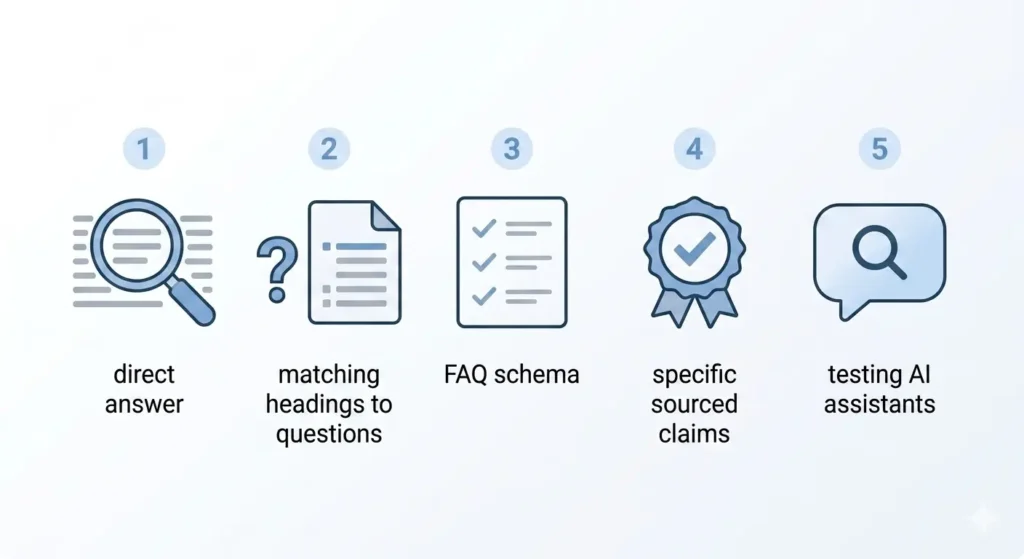
Not every well-written page gets pulled into an AI Overview. The ones that do tend to share a few concrete traits:
- The answer comes first. Don’t build up to the point over three paragraphs — state the direct answer to the implied question in the first sentence or two of a section, the way this page does under each heading.
- Headings match real questions. Structure content around the actual phrasing people (and AI systems parsing “People Also Ask” data) use, not marketing language.
- Lists and structure over dense prose. Steps, comparisons, and checklists get pulled into generated answers far more often than long unbroken paragraphs.
- FAQ sections with schema markup. A well-formed FAQ block, marked up correctly, is one of the most reliable ways to be quoted directly.
- Specific, sourced claims. Vague statements (“we get great results”) don’t get cited. Specific, checkable ones do.
Case in point: what happened when we did this ourselves
We didn’t write this page as theory. Two earlier posts on this site — one comparing AEO and GEO as concepts, and one on getting a brand cited by tools like ChatGPT and Gemini — were built using exactly the structure above: direct-answer openings, question-matched headings, and FAQ blocks. Within weeks, both were ranking in the top 10 of Google search results, a meaningfully faster and stronger outcome than most of the site’s older, broader content ever achieved — including pages that had far more search volume behind them but were competing on generic, saturated topics instead of a clearer, narrower one.
AEO/GEO content ranks higher than broad content: average Google position comparison
The lesson wasn’t “write about AI.” It was: narrow, well-structured content on a less-contested topic will consistently outperform broad content trying to compete with much larger, more established sites — and that pattern holds regardless of where the agency publishing it is based.
A basic AI-visibility checklist you can run yourself
Before hiring anyone, or before evaluating your own site, check:
- Does your most important page answer its core question in the first two sentences, or does it take several paragraphs to get there?
- Do your headings match questions a real person would type, or are they generic marketing phrases?
- Do you have an FAQ section, and is it marked up with FAQ schema (not just visually formatted like one)?
- Can a stranger verify your specific claims (numbers, timeframes, named results), or are they vague?
- Have you actually asked ChatGPT, Gemini, or Google’s AI Overview a question in your space to see who currently gets cited — and why?
What this means for choosing an SEO partner, regardless of where they’re based
If you’re an international client evaluating agencies, the practical takeaway is: ask to see structural examples like the ones above, not just a list of past clients. An agency that understands how to structure content for AI visibility — wherever they’re located — is solving a different (and increasingly more relevant) problem than one only focused on traditional keyword rankings.
FAQs
Does my agency’s location affect whether I show up in ChatGPT, Gemini, or AI Overviews?
Not in the way it affects local search results. AI-generated answers are built around finding the clearest, most directly useful content on a topic, not the searcher’s physical proximity to a business. Structure and clarity matter far more than headquarters location.
What’s the difference between ranking in Google search vs. being cited in an AI answer?
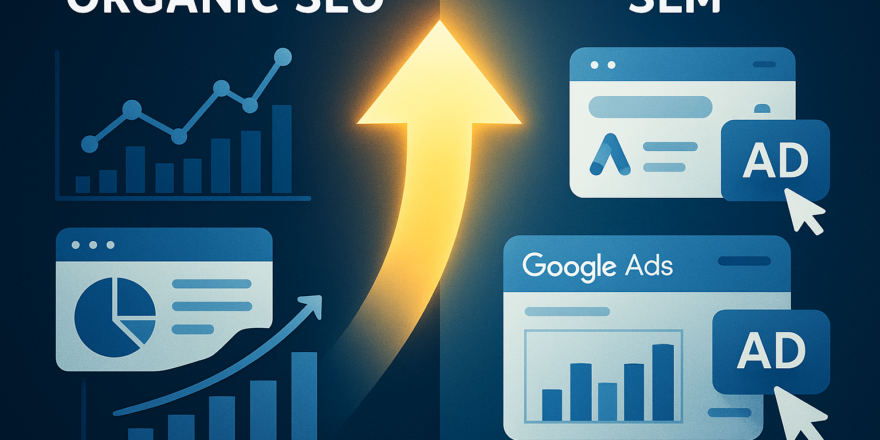
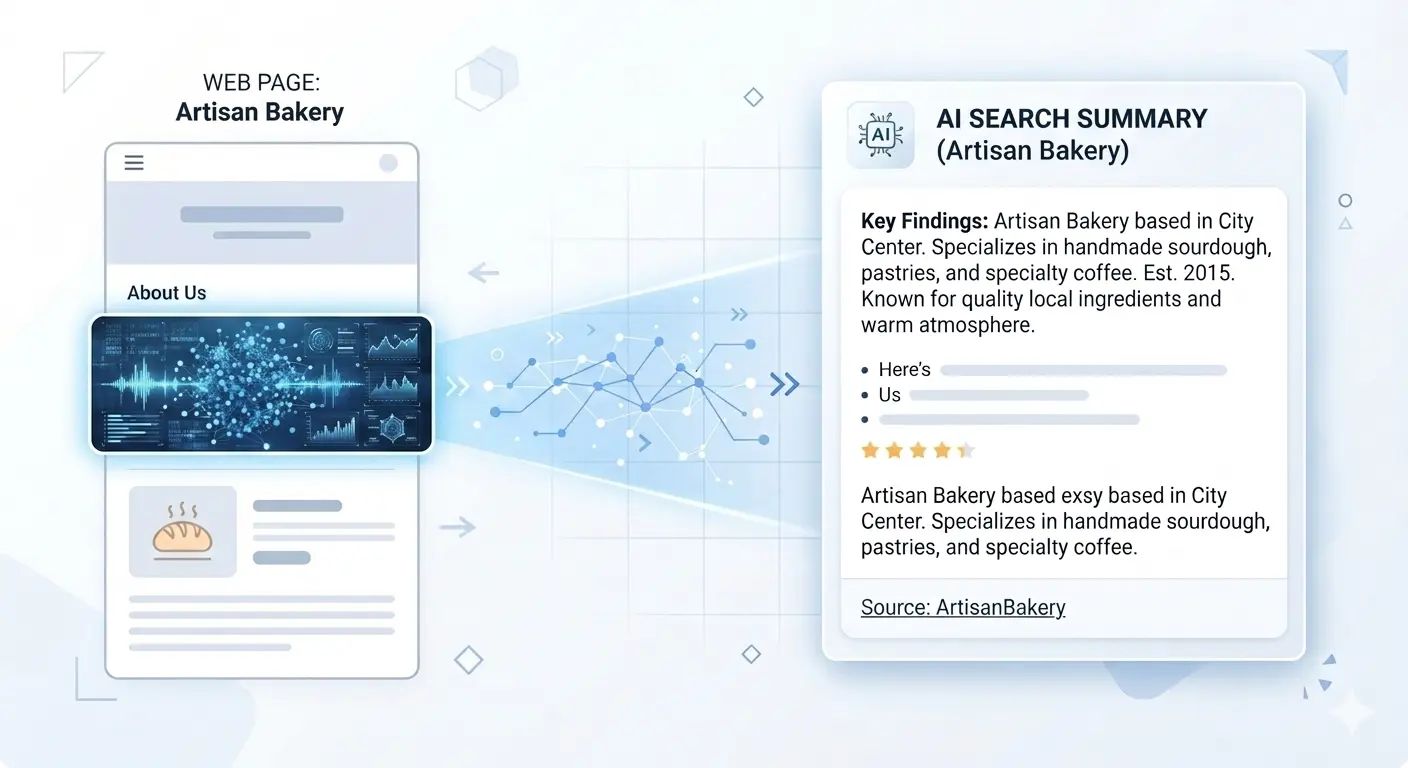
Traditional rankings are a list of links ordered by relevance and authority signals. An AI Overview or generative answer synthesizes a direct response, often pulling and attributing specific passages from a small number of sources — which is why structure (direct answers, clear headings, FAQ schema) matters more here than it does for a standard blue-link result.
How do I check if my business is already being mentioned by AI tools?
Ask the tools directly — pose the questions a potential client might ask (e.g. “best SEO agency for small businesses in [your niche]”) to ChatGPT, Gemini, and Google’s AI Overview, and see whether you, your competitors, or neither appear, and why the ones that do appear are structured the way they are.