
AEO vs GEO: What is the Difference Between AI Search Optimizations?
As the digital landscape evolves, traditional search terms are fracturing into two distinct subsets of modern optimization: Answer Engine Optimization (AEO) and Generative Engine Optimization (GEO) .
For websites with a lower authority score, understanding the precise differences between these two frameworks is the fastest way to leapfrog older, heavy-authority competitors. By formatting your content exactly how these specific engines extract data, you can secure top-tier visibility without relying on backlink power.
💡 Is your brand prepared for the future of search? Don’t build blind. Run our data-backed 2026 AI SEO Audit to measure your current visibility across conversational engines and identify instant optimization wins .
What is the Core Difference Between AEO and GEO?
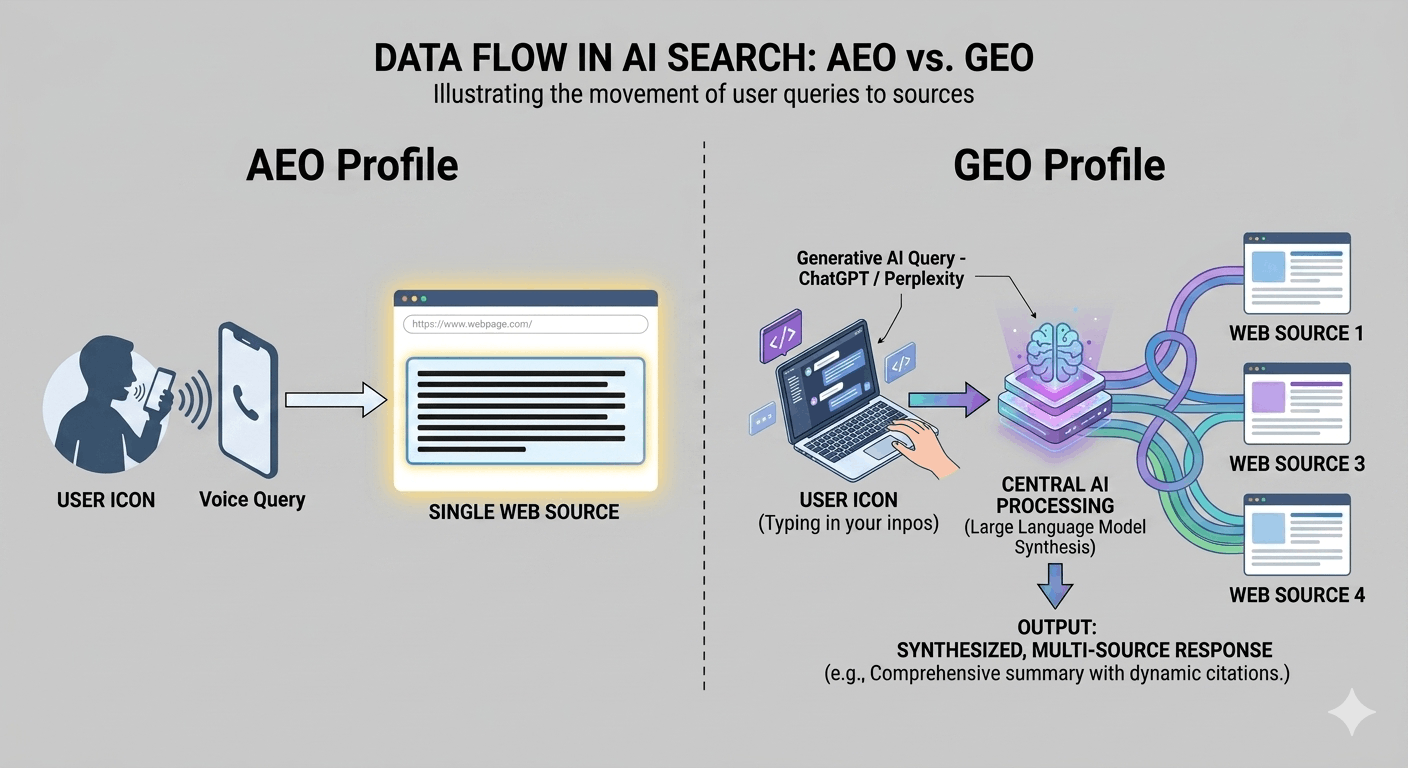
The primary difference lies in how data is processed and delivered to the end user.
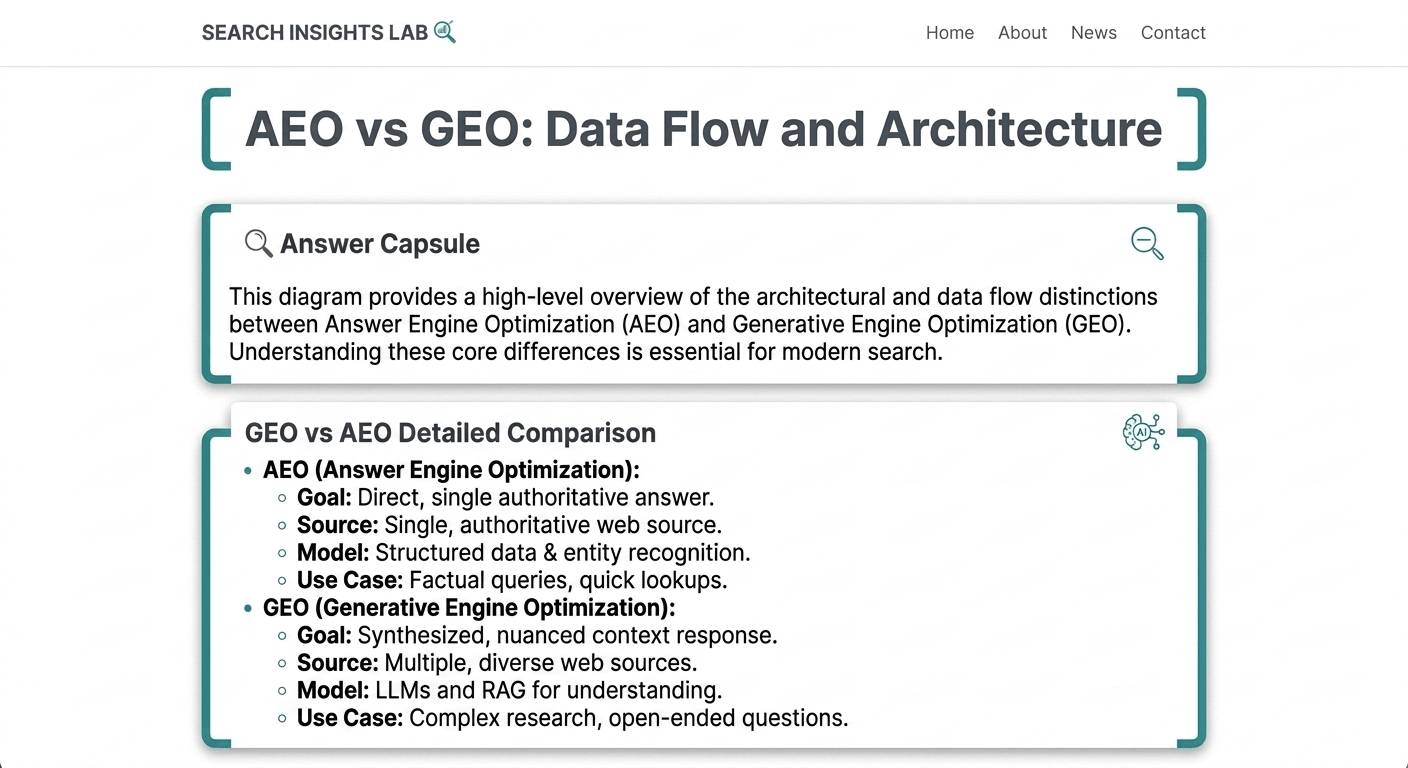
- AEO (Answer Engine Optimization) focuses on single-source, direct answers . It targets systems like voice search (Siri, Alexa) and Google’s Featured Snippets. The goal is to provide one definitive, factual answer block to a highly specific question .
- GEO (Generative Engine Optimization) focuses on multi-source, synthesized answers . It targets LLM-driven engines like ChatGPT Search, Gemini and perplexity. The engine reads multiple web pages simultaneously, blends the information together, and creates a completely new response while citing its sources .
Quick Comparison Table
| Feature / Metric | Answer Engine Optimization (AEO) | Generative Engine Optimization (GEO) |
|---|---|---|
| Primary Platforms | Google Snippets, Siri, Alexa, Google Assistant | ChatGPT, Perplexity, Gemini, Copilot |
| Data Extraction | Pulls a single, unaltered text block from one site | Synthesizes fragments from multiple sites |
| Link Placement | One clear source attribution link | Multiple inline bracketed citation links |
| Key Ranking Factor | Exact-match Q&A structure & Schema markup | Topical depth, entity relationships, clear data formatting |
How Low-Authority Sites Can Win in AEO & GEO?
When you do not have high domain power, you cannot rank for broad definitions. You must win through superior data formatting and semantic structure.
1. Master the 40-Word “Snippet Hook” (For AEO)
Answer engines scrape text strings that fit perfectly into small display fields or voice scripts. Under your subheadings, write a direct definition that is exactly 40 to 50 words long. Avoid using descriptive adjectives or introductory filler text. State the fact immediately, then follow up with a bulleted list of supporting details.
2. Embed Markdown Structures (For GEO)
Generative AI models are designed to save computing power (tokens). They favor websites that use clean markdown syntax because it requires less processing energy to read. Use bullet points, bolded key phrases, and clear H3 sub-steps. This makes your page highly “extractable” when an engine is looking for proof to support its answer .
3. Connect Your Technical AI Assets
An optimized article must sit inside a fully optimized technical ecosystem. To guarantee that AI crawlers can index your content hubs seamlessly, make sure you have applied a custom llms.txt file layout to your root directory. This tells the bots exactly where your best AEO and GEO assets live.
💻 Is your current site speed blocking AI scrapers? LLMs ignore clunky, unoptimized source code. Work with our Web Design & Development Specialists to build high-performance, fast-loading, markdown-compliant web platforms built for the future.
4. Build Contextual Citation Bridges
To prove to AI models that your pages are connected and authoritative, always link your deep-dives together. Once you have built a strong factual foundation on this page, make sure to learn the specific rules on how to optimize your website for ChatGPT search citations to convert your raw content visibility into direct, clickable web traffic.
